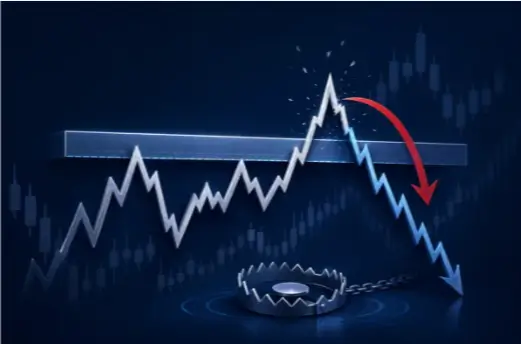

Trading volume functions as a probabilistic signal about price strength, not a guarantee of outcomes. It measures trader commitment, liquidity shifts, and directional pressure when paired with price action. Volume helps validate breakouts, fades, and candlestick patterns by reinforcing or weakening signals, guiding risk assessment and position sizing. A disciplined approach treats volume as a confirming filter, not an independent predictor, and requires thresholds and backtesting to avoid overfitting. The implications extend beyond single setups, inviting careful scrutiny of what volume implies next.
What Volume Really Reveals About Price Strength
Volume reflects the intensity behind price moves by measuring how many shares change hands during a given period.
The analysis treats volume as a probabilistic signal, not a certainty, mapping distributions of strength across time.
Observers infer liquidity cues and volume consequences as probabilistic indicators of commitment, directional pressure, and potential sustainability, while avoiding overinterpretation in isolation.
How Volume Confirms Breakouts and Fades Signals
Breakouts and fades are not single events but probabilistic transitions guided by how trading volume accompanies price movement. Volume confirms breakouts when sustained surge accompanies price rise, and fades signals when volume wanes amid price moves. Volume divergence signals shifting conviction, while liquidity impact modulates breakout strength, affecting persistence and reliability of the move in probabilistic terms.
See also: How Artificial Intelligence Is Used in Architecture
Volume With Candlesticks: Validating Key Patterns
In assessing candlestick patterns, volume provides a probabilistic filter that validates or questions pattern reliability, rather than serving as a standalone signal.
The approach assesses volume trends alongside price formations, revealing concordance or divergence that informs candlestick validation.
Findings show that elevated volume with bullish reversals strengthens reliability, while shrinking volume weakens pattern significance, supporting disciplined, data-driven decision thresholds.
Step-By-Step: Add Volume Checks to Your Trading Setup
Could integrating volume checks into a trading setup meaningfully improve signal reliability, or do practical constraints limit their usefulness?
The method proceeds stepwise: identify volume trends, confirm with price divergence indicators, and weight signals probabilistically. Systematic backtests quantify marginal gains, emphasizing disciplined thresholds and risk controls. Freedom-seeking traders gain adaptability, yet strict criteria guard against overfitting and noisy data.
Conclusion
The analysis closes with a measured cadence: volume emerges as a probabilistic mirror of price action, not a crystal ball. Each pattern gains or loses credibility only when supported by liquidity signals, trend momentum, and backtested thresholds. The data-driven framework quantifies confidence, dampening overreliance on any single cue. Yet as the market moves, the cadence of volume keeps writers guessing—strength, or a fragile tease of continuation—until the next data point tilts the balance. Suspense remains, and so does vigilance.